Musk Oxen A Growing Concern For Nome, AK, Pilots | Aero-News Network
Aero-News Network
RSS icon RSS feed
podcast icon MP3 podcast
Subscribe Aero-News e-mail Newsletter Subscribe

** AIRBORNE 05.21.13 Aero-TV-- CLICK HERE! ** HD iPad-Friendly Version -- AIRBORNE 05.21.13 **

** AIRBORNE 05.17.13 Aero-TV-- CLICK HERE! ** HD iPad-Friendly Version -- AIRBORNE 05.17.13 **

** AIRBORNE 04.01.13 SPECIAL EDITION of Aero-TV-- CLICK HERE! ** HD iPad-Friendly Version -- AIRBORNE 04.01.13 SPECIAL EDITION **

Sat, Aug 18, 2012

Musk Oxen A Growing Concern For Nome, AK, Pilots

Animals Have Been Seen Near The City's Airport

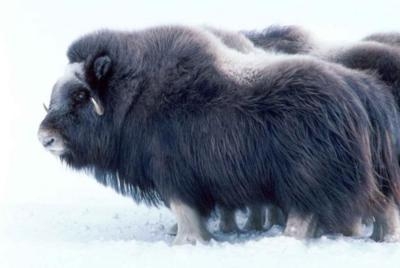
Most pilots are aware of the safety issues surrounding bird strike, but in Nome, Alaska, pilots are facing a growing concern about a different like of wildlife. Musk oxen have been seen near the city's airport, and are suspected of causing damage to some airplanes on the ground.

The animals, which can stand between four and five feet tall and weigh 800 pounds, have been moving closer to populated areas, having no natural predators and being protected by laws limiting hunting. Researchers, such as Claudia Ihi at the University of Alaska in Nome, have seen the animals "right next to the runway" in Nome, according to a report in the Alaska Dispatch.

Pilot Vic Olsen told the paper that he has noticed scrapings on airplanes near the Nome airport, and that some have been found with damaged wing struts. While he cannot say with certainty that musk oxen are the culprits, tracks around the damaged airplanes suggest they have been at least nearby.

No incident of an airplane striking a musk ox has been reported, but the local pilots say they are concerned that it is a possibility. An FAA database that tracks accidents involving wildlife indicates that there have been cases of airplanes hitting animals such as moose, caribou, and black-tailed deer at Alaska airports, and the Nome airport participates in a USDA Wildlife Management program to protect both animals and pilots. The runway is swept for animals before every departure, and pilots are informed by radio if musk oxen are spotted in the area before takeoff and landing. Airport officials are authorized to kill the animals as a last resort if other efforts to clear the runway fail.

Officials say that a permanent fence is impractical due to permafrost and snow.

The Alaska DOT's Jeremy Worrall said that the department works to keep areas near airports free of grasses and standing water that attract the animals.

(Public domain image)

FMI: http://dot.alaska.gov/nreg

Advertisement

More News

Four Companies Recognized With 2013 EBAA Safety Of Flight Awards

Cited For Focus On Maintaining And Improving Best Practices Four European companies have been recognized for their commitment to safe operations as recipients of the 2013 European >[...]

Classic Aero-TV: Viking Engines--Building A Rep For Alternative SportAv Engines

Rotax Is NOT The Only Player In Sport Aviation Propulsion Ya gotta hand to Viking... in an industry so VERY well dominated by Rotax, it takes some serious talent and extraordinary >[...]

ANN's Daily Aero-Linx (05.22.13)

The European Cockpit Association The European Cockpit Association (ECA) was created in 1991 and is the representative body of European pilots at European Union (EU) level. It repre>[...]

ANN's Daily Aero-Term (05.22.13): Known Traffic

With respect to ATC clearances, means aircraft whose altitude, position, and intentions are known to ATC.>[...]

Aero-News: Quote Of The Day (05.22.13)

"(T)he PC-24 is a completely new development – not a 'me too product'." Source: Oscar J. Schwenk, Chairman of the Board of Directors of Pilatus, introducing the company's new>[...]

blog comments powered by Disqus


Advertisement

Advertisement

Podcasts

Advertisement

© 2007 - 2013 Web Development & Design by Pauli Systems, LC