
AAIB Updates Investigation Into Heathrow 777 Accident | Aero-News Network
Aero-News Network
RSS icon RSS feed
podcast icon MP3 podcast
Subscribe Aero-News e-mail Newsletter Subscribe

** AIRBORNE 05.21.13 Aero-TV-- CLICK HERE! ** HD iPad-Friendly Version -- AIRBORNE 05.21.13 **

** AIRBORNE 05.17.13 Aero-TV-- CLICK HERE! ** HD iPad-Friendly Version -- AIRBORNE 05.17.13 **

** AIRBORNE 04.01.13 SPECIAL EDITION of Aero-TV-- CLICK HERE! ** HD iPad-Friendly Version -- AIRBORNE 04.01.13 SPECIAL EDITION **

Tue, Feb 19, 2008

AAIB Updates Investigation Into Heathrow 777 Accident

Ruled Out Ice, Water, And Contamination Of Fuel Tanks

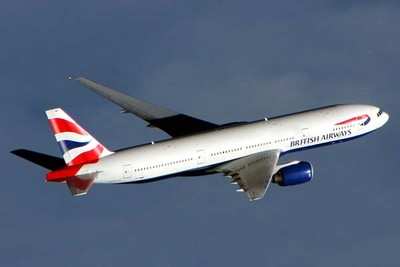
The BBC reports investigators have ruled out ice, water or contamination of fuel tanks on a Boeing 777 that was forced to land short of a runway at London Heathrow Airport on January 17. The Air Accidents Investigation Branch is quoted as saying the plane's data recorder showed nothing wrong with major aircraft systems.

There was some damage to the fuel pumps, and what were termed small items of debris found in the fuel tanks. Investigators have also ruled out bird ingestion by the engines as the cause of a failure by the engines to produce enough power to reach the runway on landing.

There were 136 passengers and 16 crew members on the plane. All survived, although a few were injured, and some have claimed trauma of various types on the British Airways flight from Beijing.

The board did note the aircraft climbed into areas with lower than average temperatures over the Urals and Eastern Scandinavia, with outside ambient temperatures reaching as low -76ºC. However, the Board noted that resulted in a total air temperature (TAT) of "only" -45 degrees C, and the minimum recorded fuel temperature was -34 degrees C... quite chilly, but still comfortably above the -57ºC freezing point of the fuel onboard.

While the investigation continues, BBC reports investigators have issued one recommendation -- that Boeing should notify all Boeing 777 operators to operate the fuel control switch to cut-off prior to operation of the fire handle, to reduce the risk of fuel leaks as seen in the aftermath of the Heathrow accident. Fortunately, while fuel leaked from the 777 as its undercarriage was damaged, the fuel did not ignite.

The AAIB also believes an evacuation checklist created by British Airways to save time over the procedures recommended by Boeing left passengers exposed to risks from fire.

"This was not causal to the accident but could have had serious consequences in the event of a fire during the evacuation," said the AAIB report.

Boeing reportedly did not find fault with the BA version of the checklist, but the board suggests Boeing make clear its own checklist should be followed in future evacuations.

FMI: Download The AAIB Update (.pdf)

Advertisement

More News

Aero-Help Wanted: ANN Needs A Good Honest Marketing Manager

ANN/Aero-TV Marketing Department Needs Part or Full Time Personnel Since ANN started, we have enjoyed the amazing support of a group of sponsors who have, by and large, been genero>[...]

Aero-News: Quote Of The Day (05.20.13)

"On his last day in the country he gave his life for, Tyler was working on his RV-8 at the EAA hangar. He spoke to (chapter member) Vance Simons, who had become a friend since he i>[...]

Klyde Morris (05.20.13)

Klyde Does 'Drone' On... FMI: www.klydemorris.com>[...]

Airborne 05.17.13: X-47B Carrier Launch, New CAF Base, Space Oddity... For Real

Also: Wanna Buy A Control Tower?, SAC 7-35 Airdata Computer, Remembering Frank Beagle, Exp 35 Astros Drop In, 777X Team Named, AF Academy Grads Will Get Their Flyover! The X-47B Un>[...]

Flight Test Engineer Turns Real-Life Experience Into New Novel

Historical Fiction Set Against Invasion Of Kuwait In 1990 In order to succeed in his invasion of Kuwait on August 2, 1990, Saddam Hussein needed weapons. Weapons lead to questions:>[...]

blog comments powered by Disqus


Advertisement

Advertisement

Podcasts

Advertisement

© 2007 - 2013 Web Development & Design by Pauli Systems, LC