Erik Lindbergh Dedicates NASA's SOFIA In Honor Of Grandfather | Aero-News Network
Aero-News Network
RSS icon RSS feed
podcast icon MP3 podcast
Subscribe Aero-News e-mail Newsletter Subscribe

** AIRBORNE 05.21.13 Aero-TV-- CLICK HERE! ** HD iPad-Friendly Version -- AIRBORNE 05.21.13 **

** AIRBORNE 05.17.13 Aero-TV-- CLICK HERE! ** HD iPad-Friendly Version -- AIRBORNE 05.17.13 **

** AIRBORNE 04.01.13 SPECIAL EDITION of Aero-TV-- CLICK HERE! ** HD iPad-Friendly Version -- AIRBORNE 04.01.13 SPECIAL EDITION **

Tue, May 22, 2007

Erik Lindbergh Dedicates NASA's SOFIA In Honor Of Grandfather

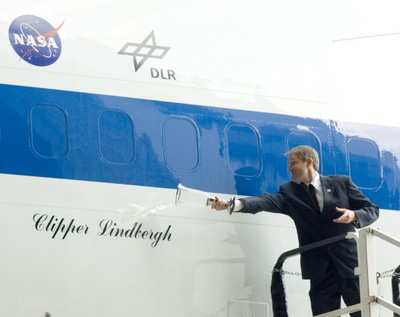
Modified Pan Am 747 Carries Its Original Name -- "Clipper Lindbergh"

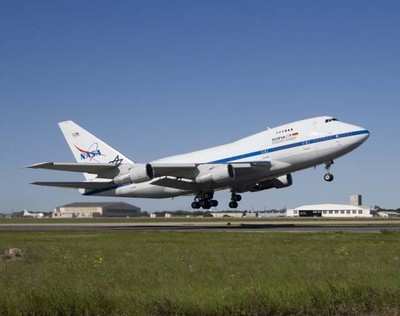
NASA dedicated a unique astronomy aircraft Monday to pioneering aviator Charles Lindbergh on the 80th anniversary of his historic transatlantic flight. Erik Lindbergh, the pilot's grandson, joined NASA for the event May 21, in Waco, TX.

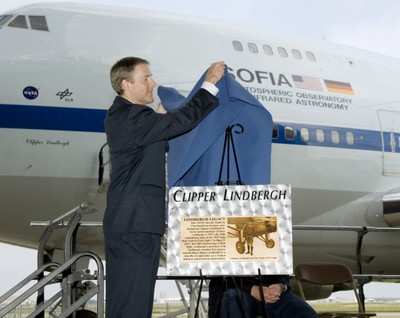
NASA's new Stratospheric Observatory for Infrared Astronomy (SOFIA) is a highly modified 747 airliner that carries a 45,000-pound infrared telescope system. Pan American Airways originally christened the plane the "Clipper Lindbergh" in 1977. At the rededication ceremony, NASA officials discussed the similarities between Lindbergh's accomplishments and SOFIA's potential to capture scientifically important infrared images unavailable to earthbound telescopes.

The SOFIA aircraft was modified at L-3 Systems in Waco and is wrapping up a series of functional checkout flights before heading to NASA's Dryden Flight Research Center, Edwards Air Force Base, CA for further tests and systems integration.

Erik Lindbergh unveiled a plaque commemorating Clipper Lindbergh. "This project is a fantastic blend of a 20th century legacy aircraft and a 21st century platform for exploration," he said.

Intended to fly above 40,000 feet, SOFIA will place its infrared telescope above nearly 99 percent of the Earth's atmospheric water vapor, greatly enhancing its abilities to study the cosmos. Its state-of-the-art telescope will be able to carry out scientific missions with greater flexibility and ease of upgrade than a satellite-borne observatory.

NASA's partner in SOFIA is the German Aerospace Center, which provided the telescope. NASA modified the aircraft. A 16-foot-high opening has been cut into the aft fuselage to permit observations to be made at altitude. Once it arrives at Dryden, SOFIA will continue flight and systems testing for about two years while its observatory system hardware and software are integrated with the aircraft. The telescope's first images are expected in 2009.

FMI: www.sofia.usra.edu

Advertisement

More News

Four Companies Recognized With 2013 EBAA Safety Of Flight Awards

Cited For Focus On Maintaining And Improving Best Practices Four European companies have been recognized for their commitment to safe operations as recipients of the 2013 European >[...]

Classic Aero-TV: Viking Engines--Building A Rep For Alternative SportAv Engines

Rotax Is NOT The Only Player In Sport Aviation Propulsion Ya gotta hand to Viking... in an industry so VERY well dominated by Rotax, it takes some serious talent and extraordinary >[...]

ANN's Daily Aero-Linx (05.22.13)

The European Cockpit Association The European Cockpit Association (ECA) was created in 1991 and is the representative body of European pilots at European Union (EU) level. It repre>[...]

ANN's Daily Aero-Term (05.22.13): Known Traffic

With respect to ATC clearances, means aircraft whose altitude, position, and intentions are known to ATC.>[...]

Aero-News: Quote Of The Day (05.22.13)

"(T)he PC-24 is a completely new development – not a 'me too product'." Source: Oscar J. Schwenk, Chairman of the Board of Directors of Pilatus, introducing the company's new>[...]

blog comments powered by Disqus


Advertisement

Advertisement

Podcasts

Advertisement

© 2007 - 2013 Web Development & Design by Pauli Systems, LC