Pratt & Whitney Celebrates 40 Years Of F100 Engine Power | Aero-News Network
Aero-News Network
RSS icon RSS feed
podcast icon MP3 podcast
Subscribe Aero-News e-mail Newsletter Subscribe

** AIRBORNE 05.21.13 Aero-TV-- CLICK HERE! ** HD iPad-Friendly Version -- AIRBORNE 05.21.13 **

** AIRBORNE 05.17.13 Aero-TV-- CLICK HERE! ** HD iPad-Friendly Version -- AIRBORNE 05.17.13 **

** AIRBORNE 04.01.13 SPECIAL EDITION of Aero-TV-- CLICK HERE! ** HD iPad-Friendly Version -- AIRBORNE 04.01.13 SPECIAL EDITION **

Thu, Jul 19, 2012

Pratt & Whitney Celebrates 40 Years Of F100 Engine Power

Combat-Proven Engine With 27 Million Flight Hours To Its Credit

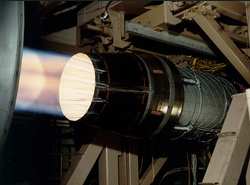
Pratt & Whitney celebrates 40 years of F100 propulsion, marking the development and delivery of its first F100 engines to support the F-15's first flight on July 27, 1972. Today, the F100 engine powers the F-15, F-16 and X-47B Unmanned Combat Air System (UCAS), with an expanding F100 family of variants. Twenty-four customers worldwide have selected the F100 to power their F-15 and F-16 fighter jets over the past 40 years.

Pratt & Whitney's F100 engine is one of the most successful fighter engines in history. The combat-proven engine has more than 27 million engine flying hours of experience. Pratt & Whitney has built more than 7,200 F100 engines for 23 countries around the world. "For 40 years, the F100 engine has provided air forces around the world with superior performance and modern propulsion capabilities," said Bev Deachin, vice president, Pratt & Whitney Military Programs & Customer Support. "We look forward to continuing to provide our customers with the world-class safety and reliability the industry has enjoyed from the F100."

The newest member of the F100 engine family, the F100-PW-229 Engine Enhancement Package (EEP), offers significant safety benefits, and increases the engine depot inspection interval from 4,300 to 6,000 total accumulated cycles (TAC). This increase is equivalent to extending the depot interval from seven years to ten years. In addition, the EEP provides a 30 percent life cycle cost reduction over the life of an F100-PW-229 engine.

FMI: www.pratt-whitney.com

Advertisement

More News

X-47B Accomplishes Its First Ever Carrier Touch And Go

Maneuver Performed Aboard CVN 77 The Navy's X-47B Unmanned Combat Air System Demonstrator (UCAS-D) began touch and go landing operations aboard the aircraft carrier USS George H.W.>[...]

Honeywell's New HTF7350 Engine To Power Bombardier Challenger 350

HTF7000 Series Surpasses 1.5 Million Flight Hours With Better Than 99 Percent Dispatch Reliability Honeywell has announced that its HTF7350, the latest engine to join its successfu>[...]

Airborne 05.21.13: Cirrus Chute Fails, NASA Record, More NIMBY Nonsense

Also: PC-12 Record, Maule Nation, Cockpit Lockout, 34,000 Airliners Needed, Beechcraft Wins Big Contract You know you're having a bad day when a flight goes so bad that you feel yo>[...]

Helo Crew Missing From Vietnam War Accounted For, Interred At Arlington

Four Buried As A Group May 2 A Navy Pilot, missing from the Vietnam War, has been accounted-for and was buried with full military honors along with his crew. According to the Depar>[...]

ANN's Daily Aero-Linx (05.21.13)

Forest Service Smoke Jumpers Smokejumping was first proposed in 1934 by T.V. Pearson, the Forest Service Intermountain Regional Forester, as a means to quickly provide initial atta>[...]

blog comments powered by Disqus


Advertisement

Advertisement

Podcasts

Advertisement

© 2007 - 2013 Web Development & Design by Pauli Systems, LC