Study Identified 130 Mitigation Measures That Need To Be Addressed
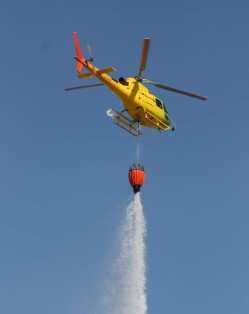
Beginning next year the U.S. Forest Service will contract a helicopter capable of fighting wildfire at night in a move to strengthen the agency’s capability to suppress fires and better protect firefighters and communities in Southern California. “We have made this important decision very carefully,” said Forest Service Chief Tom Tidwell. “We have studied night operations from every angle—risk management, business and operations—and we have concluded we can conduct night operations safely and effectively.”
The helicopter will augment those that the Forest Service currently uses on an as-needed basis under established agreements with several organizations in Southern California. This new contracting helicopter will be used by the Forest Service exclusively for firefighting operations thereby ensuring availability of a night-flying helicopter in the future. The helicopter, which will be based in Southern California, will support wildfire suppression on Forest Service-protected lands, including communities and homes within and adjacent to the Angeles, Cleveland, and San Bernardino National Forests, and the southern half of the Los Padres National Forest.
Initially, the helicopter will be equipped to drop water and retardant. In the future, mission capability can expand to include incident emergency medical transport, prescribed burning, and aerial supervision of aircraft traffic in the air above an incident.
The decision follows extensive analyses that indicate helicopter night operations can keep down the costs and risks of wildfires by helping keep fires small.
The Forest Service Helicopter Night Operations Study identified 130 mitigation measures that would need to be addressed before designing, implementing, and operating a safe helicopter night operations program. These aircraft often fly just a few hundred feet off the ground over steep terrain amidst heavy smoke, high heat, power lines, towers and trees. The contracted pilots and crew will train in night missions before going operational in 2013.
The Angeles and San Bernardino National Forests together have well over 200 fires annually.
The U.S. Forest Service, Department of the Interior, Department of Defense and FEMA continue to respond aggressively to support efforts to protect life, public safety and aid in community recovery from wildfires and subsequent flash flooding in multiple Western states. The departments, in partnerships with states and local agencies, have developed a cohesive strategy to respond to the increase in wildfires in recent years by focusing on:
- Restoring and maintaining resilient landscapes. Through forest and rangeland restoration activities such as mechanical thinning and controlled burns, officials can make forests and rangelands healthier and less susceptible to catastrophic fire.
- Creating fire-adapted communities. The Forest Service, the Department of the Interior and their partners are working with communities to reduce fire hazards around houses to make them more resistant to wildfire threats.
- Responding to Wildfires. This element considers the full spectrum of fire management activities and recognizes the differences in missions among local, state, tribal and Federal agencies.
On average, the USDA Forest Service and the Department of the Interior bureaus respond to about 16,500 wildfires per year that occur on land under their jurisdiction and assist state and local agencies in responding to a significant number of the approximately 60,000 wildfires per year that occur on land under their jurisdiction. Federal firefighters, aircraft, and ground equipment are strategically assigned to parts of the country as the fire season shifts across the nation. Firefighting experts will continuously monitor conditions and move these assets as necessary to be best positioned and increase initial response capabilities. In addition, federal agencies are conducting accelerated restoration activities nationwide aimed at healthier forests and reduced fire risks in the years to come.
(Photo from file)



 Airbus Racer Helicopter Demonstrator First Flight Part of Clean Sky 2 Initiative
 See All