Acting FAA Administrator Huerta, Others Address The Gathering
More than 130 pilots, government officials, and representatives of manufacturers, training organizations, and academia gathered in Washington, D.C. Thursday at a one-day “Evolution of Safety Through Pilot Training” conference hosted by the Air Line Pilots Association, Int’l, and sponsored by Rockwell Collins and GE.
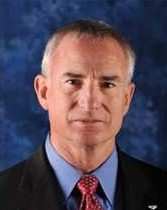
Opening the conference, ALPA’s president, Capt. Lee Moak (pictured), noted, “It would be tough for us to cover all of the factors related to the training of qualifications of airline pilots, but at ALPA, the topic is important enough for us to start and lead the discussion.”
Moak offered these observations about the current state of the airline industry with regard to training:
- “Our industry is constantly evolving. The technology and operations have advanced and are changing to fit many different missions.”
- “As airline pilots, we fly for airlines that have diverse operations, and each of our airlines have implemented required training programs differently.”
- “While our training programs have also evolved to keep up with the changes in our operations, there is a need to determine whether a ‘standard’ training template fits all.”
Introducing keynote speaker and FAA Acting Administrator Michael Huerta, Moak stressed, “The FAA has been a genuine partner with ALPA and the rest of the industry by providing leadership and working to promote better pilot training and qualification standards.”
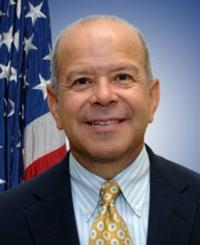
Huerta (pictured) thanked ALPA for its constructive engagement in several ongoing efforts to enhance safety through improved pilot training: “I appreciate that in every step of this process, ALPA has lent its expertise and assistance for these important efforts,” he declared. “ALPA members have served on at least five different Aviation Rulemaking Committees—ARCs—and the FAA has taken the reports from those ARCs to inform our work. We have reviewed the recommendations and have used them to propose changes to multiple regulations.”
Capt. Leja Noe (MAG), ALPA Training Council chair and Mesa MEC Central Air Safety chair, moderated a panel on the future of airline pilot hiring and training. With a predicted global pilot shortage coming but the FAA expected to issue higher minimum flight time for entry-level airline first officers next year, various organizations and government agencies are scrambling to find the best ways to recruit, screen, train, and retain the best possible airline pilots.
Advanced Qualification Program (AQP) training, now having been implemented at a number of airlines for 22 years, was the subject of a panel moderated by Capt. Frank Cheeseman (UAL). Panelists agreed that AQP offers several improvements over traditional training programs, including added flexibility, but that each airline—with input from its pilot group—must customize AQP to meet its specific needs. They also discussed the many factors that need to be considered when implementing AQP.
Capt. Bryan Burks (ALA), a member of the ALPA Human Factors and Training Group, led a panel on “Producing Better-Trained Pilots with Technology.” The presentations and discussions ranged across the state of full-motion flight simulators and other flight training devices to the pros, cons, and pitfalls of “distance learning.”
“Establishing the Qualifications for Safe, Proficient Airline Pilots,” a panel moderated by Capt. Chuck Hogeman (UAL), ALPA Aviation Safety chair, rounded out the day. FAA, airline, and Embry-Riddle Aeronautical University representatives offered their perspectives on this complicated and controversial topic.



 Unfortunate... ANN/SportPlane Resource Guide Adds To Cautionary Advisories
 See All