Can You Help?
The UK Air Accidents Investigation Branch can narrate a
story so well, that we like bringing you excerpts, in their own
words, to illustrate "things from which we can learn." Here's an
example:
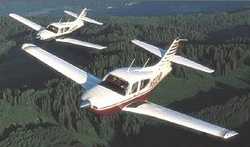 Some 15 minutes in to
the flight, the pilot noticed a slight reduction in engine power.
Almost immediately, a significant amount of blue smoke entered the
cabin. As the visibility reduced, the pilot elected to make a
forced landing, but before he could shut the engine down, it
seized. Following this, the smoke dissipated but the aircraft
suffered extensive damage as it landed in a field. Examination of
the aircraft revealed clear evidence of loss of engine oil in
flight, but despite a detailed strip examination of the engine, the
origin of the leak was not established. Prior to flight, the pilot
had checked the oil level and between 7 and 8 quarts were indicated
on the dipstick.
Some 15 minutes in to
the flight, the pilot noticed a slight reduction in engine power.
Almost immediately, a significant amount of blue smoke entered the
cabin. As the visibility reduced, the pilot elected to make a
forced landing, but before he could shut the engine down, it
seized. Following this, the smoke dissipated but the aircraft
suffered extensive damage as it landed in a field. Examination of
the aircraft revealed clear evidence of loss of engine oil in
flight, but despite a detailed strip examination of the engine, the
origin of the leak was not established. Prior to flight, the pilot
had checked the oil level and between 7 and 8 quarts were indicated
on the dipstick.
...Following an uneventful take off and climb to 4,000 feet, the
pilot checked the engine temperatures and pressures and found them
to be in the normal range. Some 15 minutes into the flight he
noticed a slight engine power loss and this was immediately
followed by a significant amount of blue smoke entering the cabin
from the right and centre at about windscreen height.
As the smoke increased in intensity, the visibility reduced
within the cockpit and so the pilot elected to shut down the engine
and carry out a forced landing. As he selected the engine mixture
to idle cut off, a “click, click” noise was heard from
the engine, which then seized... The pilot was now committed to a
forced landing...
"Well, we're here," someone was heard to have said:
Whilst on the 45° approach leg the pilot felt he
was too high and needed to lose height, and so he attempted to
achieve this by selecting the landing gear down. However, he now
found it increasingly difficult to maintain the required glide
airspeed of 85 kt and so turned directly in to the field. Following
the turn, and once the boundary hedge of the field had been
cleared, the flaps were fully deployed but, with the aircraft now
at about fifty feet above the ground, the rate of descent increased
rapidly. In an attempt to regain airspeed and subsequently to
arrest the rapid rate of descent, the pilot pushed the nose of the
aircraft down. Just prior to the touchdown a flare was initiated,
at which point the aircraft landed heavily. The landing gear
absorbed most of the impact but then collapsed.
Once G-RJCP came to a halt the pilot and his passenger, who were
wearing lap and diagonal harnesses, left the aircraft, unhurt,
using doors which had already been unlatched during the final
approach to the field.
So, what the heck happened?
 On inspection, it was readily
apparent that the engine had a large hole in the top of the
crankcase close to number four cylinder position, and so it was
removed from the airframe to facilitate a strip examination at an
engine overhaul facility, under the supervision of the AAIB. It had
suffered a catastrophic failure, was totally seized and the large
hole in the top of the crankcase above the number four cylinder had
been caused by the number four connecting rod becoming detached
from its piston and then being forced upwards. The engine generally
exhibited signs of overheating, consistent with operating with a
lack of oil...
On inspection, it was readily
apparent that the engine had a large hole in the top of the
crankcase close to number four cylinder position, and so it was
removed from the airframe to facilitate a strip examination at an
engine overhaul facility, under the supervision of the AAIB. It had
suffered a catastrophic failure, was totally seized and the large
hole in the top of the crankcase above the number four cylinder had
been caused by the number four connecting rod becoming detached
from its piston and then being forced upwards. The engine generally
exhibited signs of overheating, consistent with operating with a
lack of oil...
E xcept, we need a punchline. Here's the best the
evidence would yield:
Despite extensive examination of the engine and the aircraft the
cause of the oil loss in flight was not established.
If you're of an inquiring mind, you might want to see if
they missed something. The whole report is at the link
below.



 Airborne 04.16.24: RV Update, Affordable Flying Expo, Diamond Lil
 See All