Wed, Jun 25, 2003
Mission Will be 34th Flight of Air-Launched Rocket
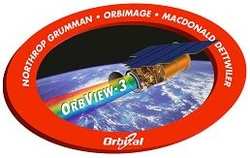 Orbital Sciences Corporation is all
set to launch the OrbView-3 high-resolution imaging satellite that
the company designed and built for Orbital Imaging
Corporation aboard a Pegasus(R) rocket, scheduled to launch
tomorrow (Thursday, June 26).
Orbital Sciences Corporation is all
set to launch the OrbView-3 high-resolution imaging satellite that
the company designed and built for Orbital Imaging
Corporation aboard a Pegasus(R) rocket, scheduled to launch
tomorrow (Thursday, June 26).
The flight will originate from Vandenberg Air Force Base (CA).
The available launch window for the OrbView-3 mission extends from
2:50 p.m. to 3:04 p.m. (EDT). This operational schedule is subject
to the completion of final pre-launch activities, as well as
acceptable weather conditions at VAFB at the time of the
launch.
Ten minutes, from release to first orbit.
The powered flight sequence for the OrbView-3 mission
will take approximately 10 minutes, from the time the Pegasus
rocket is released from the L-1011 carrier aircraft to the time
that the satellite is deployed into orbit. Orbital plans to launch
the 304-kilogram OrbView-3 spacecraft into an initial "parking"
orbit, from which the spacecraft will be maneuvered into its final
operational orbit 470 kilometers above the Earth, inclined at 97
degrees to the equator.
About Pegasus:
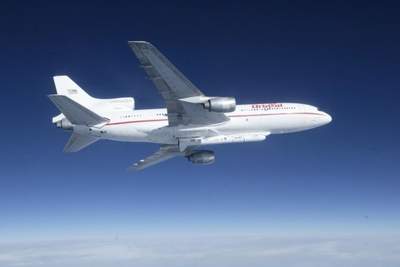 Pegasus is the world's leading
launch system for the deployment of small satellites into low-Earth
orbit. Its patented air-launch system, in which the rocket is
launched from beneath Orbital's Stargazer, L-1011 carrier
aircraft over the ocean, reduces cost and provides customers with
unparalleled flexibility to operate from virtually anywhere on
Earth with minimal ground support requirements. Pegasus is the
world's only small launch vehicle to have earned NASA's Category 3
certification, which allows the U.S. space agency to launch its
most valuable payloads aboard the rocket.
Pegasus is the world's leading
launch system for the deployment of small satellites into low-Earth
orbit. Its patented air-launch system, in which the rocket is
launched from beneath Orbital's Stargazer, L-1011 carrier
aircraft over the ocean, reduces cost and provides customers with
unparalleled flexibility to operate from virtually anywhere on
Earth with minimal ground support requirements. Pegasus is the
world's only small launch vehicle to have earned NASA's Category 3
certification, which allows the U.S. space agency to launch its
most valuable payloads aboard the rocket.
The Category 3 certification is achieved through a long-term
record of highly reliable launch services, such as the current
record of 19 consecutive successful Pegasus missions carried out
since 1997.
The OrbView-3 mission will be the 34th flight of the
Pegasus rocket and the third of four planned missions in 2003.
Earlier this year, Orbital successfully launched two company-built
scientific satellites for NASA in separate missions. In January,
Orbital launched NASA's SORCE satellite aboard Pegasus and, in
April, another Pegasus rocket delivered NASA's GALEX satellite into
orbit. Following the OrbView-3 mission, Orbital plans to launch the
SciSat satellite for NASA/Kennedy Space Center and the Canadian
Space Agency later this summer.
More News
Aero Linx: International Business Aviation Council Ltd IBAC promotes the growth of business aviation, benefiting all sectors of the industry and all regions of the world. As a non->[...]
"During the annual inspection of the B-24 “Diamond Lil” this off-season, we made the determination that 'Lil' needs some new feathers. Due to weathering, the cloth-cove>[...]
Also: Bushcat Woes, Hummingbird 300 SL 4-Seat Heli Kit, Carbon Cub UL The newest Junkers is a faithful recreation that mates a 7-cylinder Verner radial engine to the airframe offer>[...]
Also: Seaplane Pilots Association, Rotax 916’s First Year, Gene Conrad After a decade and a half of struggling with the FAA and other aero-politics, G100UL is in production a>[...]
Also: Martha King Scholarship, Montaer Grows, Textron Updates Pistons, FlySto The FAA is hiring thousands of air traffic controllers, but the window to apply will only be open for >[...]



 ANN's Daily Aero-Linx (04.16.24)

 See All