Ice is Mother Nature's Way Of Keeping You Wary
For those of us who have "hit the boots" (or the equivalent
system on your favorite bird) a few times in the last few days due
to the ever-present seasonal 'charms' of in-flight icing, we
thought a series of short tips form Cirrus Design's Scott Winter
(yes, that IS his real name) might help us all to consider some of
the realities of this time of year. So... here are the first of
seven tips for dealing with icing. Y'all be careful out there!

Aero-Tip #5: Remember to accurately evaluate
weather before flight to identify safe areas of operations. Tools
such as pilot reports and AIRMETs are subjective and forecast,
respectively.
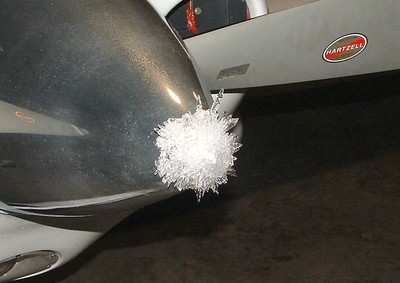
De-Coding Pilot Reports
Pilot reports are a great means to determine the actual
conditions of the atmosphere. These reports come from pilot's
already flying. Pilot reports can help to confirm or negate the
forecasted conditions.
Pilot reports do, however, have limitations. These limitations
MUST be understood if you want to accurately use the information
they contain. When evaluating these reports, commonly referred to
as PIREPs, remember that from the time they are issued, they are
only getting older. There is no set time frame that determines
their validity period, so you must determine if you think the
report is still accurate. Most pilots use about one to two hours as
a general rule.
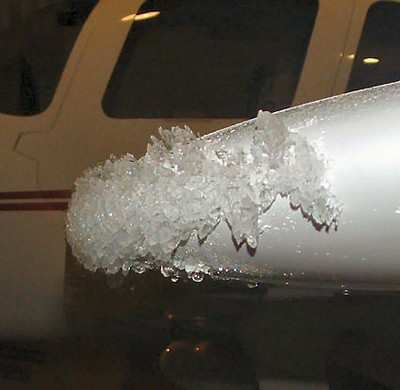
Aircraft size is another concern when working through PIREPs. It
is always best to find an aircraft similar to the one you will be
flying. While it may be possible for a large airliner to report
negative icing, it is important to remember they are larger and
faster than our general aviation aircraft. These large aircraft are
equipped with de-ice systems and simply from their speed, may have
skin surface temperatures 2-4 degrees warmer than our aircraft.
This could prevent ice from forming on larger aircraft that may
pose a threat to our smaller airframes.
Finally, when reviewing PIREPs, analyze how closely the PIREP is
to your route of flight. Again, there is no regulatory distance
which makes a PIREP valid. You must use honest discretion when
determining if the conditions of the PIREP will honestly relate to
your flight route.
About Scott Winter
Scott is a member of the Flight Standards Department at Cirrus
Design Corporation in Duluth, MN (one of those places that see more
than its fair share of icing encounters). Born and raised in
Milwaukee, WI, he discovered his passion for aviation at an early
age. After obtaining his Private Pilot Certificate prior to his
senior year in high school, he attended Minnesota State University,
Mankato (MSU) and graduated with a Bachelor's degree majoring in
Professional Flight. In December 2006, he completed his Master's of
Science degree from MSU spending time focusing on aviation weather,
scenario-based training, and visualization techniques to enhance
the methods used to educate aviators.
Note: ANN thanks Cirrus Pilot William Dobson
and other members of the Cirrus community, for the use of the
excellent SR20 icing pix...



 ANN's Daily Aero-Term (04.20.24): Light Gun

 See All