Leading Kit-maker Approaches a Milestone: 4000 Completed and
Flown
By Kevin R.C. "Hognose" O'Brien, Aero-News Senior
Correspondent
In the past we've written about the steady pace of completions
of the world's most popular kit aircraft, Van's Aircraft's
RV-series. Well over 400 machines were completed in 2003, and the
pace of completions in 2004 makes one wonder if Van's will post the
completion of the 4,000th RV-series homebuilt before year end? Or
will it come a few weeks into 2005?
Will they or won't they? December is a slow building month, with
holidays and family activities keeping builders out of their
workshops. Winter in the Northern Hemisphere plays havoc with
first-flight plans. But Van's is tantalizingly close. This morning,
2nd December, the Van's website reports 3,957 RV's completed and
flown. They are 43 short of the magic Four Large... and if they
kept their annual rate for the remaining 28 days of December, they
just might do it. (If not, of course, the milestone will certainly
fall in January).
Four Thousand. Yikes! What does this number mean? Well, the only
homebuilt aircraft which even approaches the popularity of the
Van's RV series is the epochal Rutan canard series, which is not a
perfect comparison: it's a plans-built aircraft for which plans
have been unavailable for almost 20 years (although the derivative
Cozy is still available for people who prefer that concept), and
odds are that there will NEVER be 4,000 completions. Jim Bede sold
around 4,000 all-metal BD-5 kits, but his sport plane design was
cursed with engine issues for years, and suffered a very low
completion rate. But Van hasn't sold 4,000 kits -- his builders
have FLOWN 4,000 kits. No homebuilt designer has approached that
number. Not ever. And none is on the horizon.

Even if Van stopped selling kits today, there are a vast number
of kits still in the pipeline. Van's hasn't published exact sales
numbers that I am award of, but comparing serial numbers and Vans'
occasional releases to number-flown statistics, there are about
2,500 RV-6s alone in the pipeline, and that model has been
supplanted by the improved RV-7, and another 1,500 of the RV-9.
Why are Van's kits so popular? There are two reasons: the plane,
and the company. The plane -- any model of RV -- is a good
practical machine, not compromised in any performance measure, but
optimized in a balance of all, and well-integrated to yield
pleasant handling characteristics. It's not marathon runner, a
sprinter, or a heavyweight boxer: it's more like the all-round
athlete who lettered in several sports. Evolution, not revolution
(which is a fine thing: attempts at revolution in homebuilt
aircraft often stumble). Van's isn't shy about touting the sporty
handling of the low-winged, metal planes, but RV drivers themselves
are his best salesmen: as Packard used to say, "ask the man who
owns one." The answer you get will likely begin with an unofficial
Van's trademark: "The RV Grin."
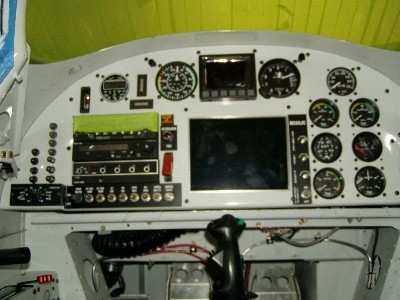
RV's have achieved this production number -- one many certified
aircraft manufactures can only envy -- with a kit that requires
significant hard work in even its most complete Quick-Build form.
Nobody builds an RV by shaking the crate until the pieces stick
together, and there's no factory builder assist program where you
sip coffee while factory technicians put your plane together. When
an RV first sees air under its wheels, somebody has spent many,
many hours to make it happen. And few RVs are built in the minimum
possible time, as builders go the extra mile to pursue excellence.
The kit gives them a good base for that: the factory riveting puts
most certified airplanes (and a few certified bizjets) to shame.
The RV is an excellent all-around sport/utility aircraft, a
thumping good value, and it builds from a very good kit, which is
half of the reason that many thousands of builders have thought was
worth the effort.
The company is the other factor in RV's success. Van's is a bit
unusual among kit aircraft makers: the company makes no extravagant
claims, and publishes no optimistic specifications. An RV kit
assembled according to the instructions just flat performs to the
designer's specifications. (Perhaps it's an unfortunate point that
this is unusual, but it's true -- many kit manufacturers can't
resist applying a bit of gloss to the spec sheet, and a few of them
are so far out there, that they must be working with different laws
of physics than Isaac Newton's and ours). Van's delivers all it
promises, a consumer experience that should be universal, but which
isn't, always, in our industry.
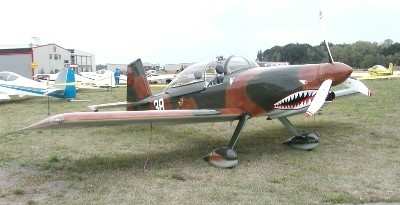
The RVs are unusual in other ways, as well. The rule of thumb
for homebuilt resale values is: "Don't Expect More Than the
Residual Value of the Engine." This applies to most homebuilts, but
not all -- and certainly not to the popular and sporty RV-6, 7 and
8. A vibrant secondary market in these machines shows that, even
with 4,000 built, there will still be more eager buyers chasing too
few completed and available RVs. Some builders and buyers have seen
their RVs appreciate, like some certified aircraft have. (Too few
of the practical RV-9 and four-seat RV-10 have come on the
secondary market to make a determination, but it's reasonable to
expect that they will perform like their stablemates in this
measure, also).
The sheer popularity of the Van's RV also helps: it's reached a
critical mass where there are endless resources, encouragement, and
support for the would-be RV builder or pilot. He or she is not just
building an airplane, but joining a proud and strong tribe. An RV
can't do everything, so there is plenty of room in the wide world
of experimental-amateur built aviation for other designs. If you
have an unusual mission you need something more specialized; if you
are looking to shock the world with your bleeding-edge radicality
you aren't going to look here. But for an all-round good machine,
good firm, and good building experience, you can't go wrong with a
kit from the Oregon firm.
So we understand why someone will soon do First Flight Number
4000. But who -- and when?
Stay tuned.



 SpaceX to Launch Inversion RAY Reentry Vehicle in Fall
 See All