Team Aims For August Presentation
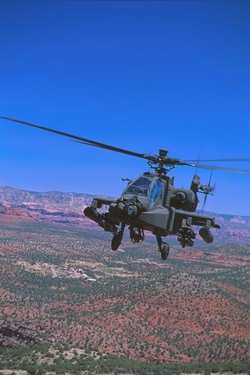 In a kind of old-world
matchmaker meets new-world technology project, researchers at Fort
Rucker in Alabama are developing a test that will assist the Army
in matching the best pilots to the best missions and aircraft.
In a kind of old-world
matchmaker meets new-world technology project, researchers at Fort
Rucker in Alabama are developing a test that will assist the Army
in matching the best pilots to the best missions and aircraft.
According to the Army News, the computer-based testing program
is called the Track Assignment Classification Tool and is designed
to ensure Army aviators enjoy a long and successful career -- and
save the Army a few bucks in the process.
About a year ago, the Army decided it needed "a classification
instrument for assigning aviator candidates to a specific aviation
mission and aircraft type." Enter research psychologist Dr. Larry
Katz and his research team at Fort Rucker's US Army Research
Institute for the Behavioral and Social Sciences Rotary Wing
Aviation Research Unit.
"The whole idea is that this should increase pilots' job
satisfaction because we are placing them where they look like they
best fit based on their skills, abilities, personality constructs
and demographics," said Katz. "The rationale is that if we could
assign individuals to the aircraft and mission type that they are
best suited for, it might increase retention and improve an
aviator's career overall."
Once out of flight school, aircraft-to-pilot matchups are
currently based on grades. Top of the class usually gets their
choice of the top of the line; the bottom pretty much gets whatever
is left.
The test takes about two and half hours and evaluates things
like spatial apperception, mechanical comprehension, perceptual
speed, and accuracy and personality characteristics. The written
portion is in multiple-choice and scenario format. The
testing station includes a joy stick, throttle, head phones and
computer monitor.
"Yes, the test is challenging, but fun, too, because it is a bit
like playing a video game," Dr. Katz said.
CW4 Danny Andrews is an instructor and flight examiner who has
been assisting with the test's development. He labels TACT
challenging and "difficult" because certain parts of the test
require major amounts of concentration.
Like the one part that tells pilots to track two "targets" on a
computer screen but to simultaneously listen for just odd numbers
in the right side of the headset. But, in the real world, pilots
have to multi-task like that, Andrews notes.
"The environment the test creates is very similar to what pilots
would be doing in the aircraft," he said.
The head of the Rotary Wing Aviation Research Unit, Dr. William
Howse, predicts the TACT will maximize training success by better
fitting students to aircraft, according to the Army News.
"(We are trying to) improve the aviators while keeping the costs
in control," he said. "By selecting the right people, we reduce
training losses (like) individuals who don't complete the
training."
Katz and his team plan to run 120 test subjects through the test
before making a final presentation to the Army. The test subjects
will be made up of mainly instructor-pilots or
standardization-pilots with at least 500 flight hours, Katz
said.
He said he hopes to present the completed product in August.
It is unknown when the Army would implement the test after
approval. Katz said other tests he and his team have created were
usually put into practice within about six months.
"This is much better than what we have been doing in the past,"
Andrews. "It (the test) is going to make a huge difference in Army
Aviation."



 ANN's Daily Aero-Term (04.14.24): Maximum Authorized Altitude
 See All