Citizens Against Waste Says There Are More Important Matters At
Hand
Citizens Against Government Waste (CAGW) Thursday harshly
criticized plans to move forward with missions to the moon and Mars
with an impending record deficit, chronic management problems at
NASA, and unresolved questions about the missions' cost and
feasibility. NASA's new administrator Michael Griffin has said that
the space agency will have the money to implement President Bush's
"Vision for Space Exploration," aimed at returning humans to the
moon by 2020 and eventually sending them to Mars.

"A manned mission to Mars is of questionable scientific value
and could cost up to $1 trillion," CAGW President Tom Schatz said.
"The immense technological challenges involved are expected to be
overcome by an agency that currently lacks the ability to launch a
shuttle beyond low-earth orbit."
The Columbia Accident Investigation Board described in stinging
detail the long-term and widespread failures of NASA's entire
management that caused the Columbia and Challenger disasters and
the problems that continue to plague the manned- spaceflight
program. Institutional arrogance precludes managers from dealing
honestly with internal problems or outside criticism. Management
routinely "deferred to layered and cumbersome regulations rather
than the fundamentals of safety."
 Also, a recent report from the
Government Accountability Office (GAO) faulted NASA for not
adequately exploring alternatives to the space shuttle. NASA has
been unable to complete an audit of the agency's budget for the
past five years and its accounting is labeled "high risk" by the
Bush Administration. A 2004 GAO report revealed that NASA had lost
$34 million in government property since 1997 and has failed to
keep track of items including a $300,000 robot.
Also, a recent report from the
Government Accountability Office (GAO) faulted NASA for not
adequately exploring alternatives to the space shuttle. NASA has
been unable to complete an audit of the agency's budget for the
past five years and its accounting is labeled "high risk" by the
Bush Administration. A 2004 GAO report revealed that NASA had lost
$34 million in government property since 1997 and has failed to
keep track of items including a $300,000 robot.
The President's initiative was left for dead in the summer of
2004 after a lukewarm reception from the public and deep skepticism
from prominent scientists. But funding for the initiative was
included at the last minute in the fiscal 2005 omnibus bill. For
fiscal 2006, House appropriators have marked up NASA's budget at
$16.5 billion - including $3.1 billion for the moon/Mars initiative
- which is $275 million above fiscal 2005 levels and $15 million
above the President's budget request.
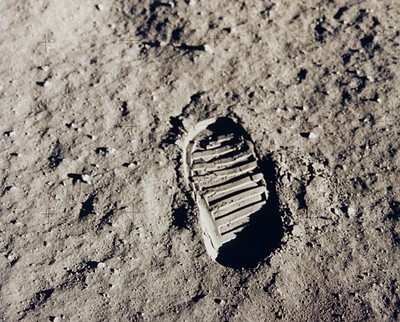
Grandiose tales of bases on the moon and trips to Mars are
reminiscent of the International Space Station (ISS), which was
once envisaged as a beehive of research, a stopover service station
for space travelers, and an assembly and manufacturing plant. The
ISS is expected to be finished in 2010 - 16 years behind schedule,
$92 billion over budget, with perhaps one-eighth of the capability
that engineers had hoped. NASA expects to abandon the ISS after
only seven years of full operation. The ISS is a glaring link in a
continuous chain of space projects that are either abandoned, end
in disaster, or deliver far less than promised. NASA's unbroken
string of six cancelled vehicle programs stretches back to the
Reagan Administration, and the $125 million Mars orbiter was lost
to improper conversion between metric and English units.

"Mankind's future in space no longer depends on politicized
bureaucracies and tax-funded boondoggles," Schatz concluded. "The
success of SpaceShipOne, startup space companies, and the advent of
space tourism have opened the door to an exciting future of private
enterprise in space. Such endeavors are economical, realistic, and
more likely to yield tangible benefits for mankind and
taxpayers."



 SpaceX to Launch Inversion RAY Reentry Vehicle in Fall


 See All