
Report: Nitrogen Used To Fill Emergency O2 Tanks On Qantas Planes | Aero-News Network
Aero-News Network
RSS icon RSS feed
podcast icon MP3 podcast
Subscribe Aero-News e-mail Newsletter Subscribe

** AIRBORNE 05.24.13 Aero-TV-- CLICK HERE! ** HD iPad-Friendly Version -- AIRBORNE 05.24.13 **

** AIRBORNE 05.21.13 Aero-TV-- CLICK HERE! ** HD iPad-Friendly Version -- AIRBORNE 05.21.13 **

** AIRBORNE 04.01.13 SPECIAL EDITION of Aero-TV-- CLICK HERE! ** HD iPad-Friendly Version -- AIRBORNE 04.01.13 SPECIAL EDITION **

Mon, Dec 17, 2007

Report: Nitrogen Used To Fill Emergency O2 Tanks On Qantas Planes

Potentially Deadly Error Triggers Worldwide Investigation

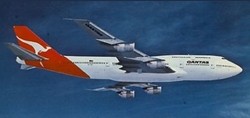
The Australian Transport Safety Bureau confirmed Saturday it's investigating how, and why, engineers at Qantas accidentally filled emergency oxygen tanks on a Boeing 747 with nitrogen instead.

The incident occurred at Melbourne Airport, reports The Sydney Morning Herald, and triggered an immediate check of over 50 planes serviced by the apparently mis-labelled nitrogen gas cart.

An aircraft engineer noticed the error and tipped off the Civil Aviation Safety Authority, which ruled it was an isolated incident. However, an unnamed aviation source told the Herald the mistake may have affected "hundreds of planes worldwide.

"Any international jet that passed through Melbourne and was serviced by Qantas could have had nitrogen pumped into its oxygen tanks," said the source.

Qantas reportedly took delivery of the nitrogen cart 10 months ago, and "it looked exactly like the old oxygen cart. When the attachments did not fit they went and took them off the old oxygen cart and started using it.

"This could have affected at least 175 planes."

Nitrogen is commonly used on commercial airliners to fill landing gear tires. The gas is lighter than regular air, and is resistant to moisture which can degrade rubber.

Though nitrogen makes up the bulk of breathable air, pure nitrogen can be deadly to humans as it causes asphyxiation, starving the body of oxygen.

"If there was an emergency and the pilot took nitrogen instead of oxygen, instead of gaining control of the aircraft he would black out and it would be all over. It's a pretty serious mistake," Dr. Ian Millar, director of the hyperbaric medicine unit at Melbourne's Alfred Hospital, told the Herald.

A spokeswoman with the ATSB said Qantas identified 21 aircraft at risk due to the error, and another 30 that may have received low amounts of nitrogen in their oxygen supplies during top-off operations. No actual incidents of damage or safety issues have been reported.

FMI: www.qantas.com

Advertisement

More News

ANN's Daily Aero-Linx (05.24.13)

Stormbirds A confederation of Luftwaffe-related web sites, providing reference-grade coverage of the Messerschmidt 262 and other advanced combat aircraft of the Third Reich.>[...]

ANN's Daily Aero-Term (05.24.13): Terrain/Obstruction Alert

A safety alert issued by ATC to aircraft under their control if ATC is aware the aircraft is at an altitude which, in the controller's judgment, places the aircraft in unsafe proxi>[...]

Aero-News: Quote Of The Day (05.24.13)

"You have a huge job ahead of you. The challenges are many and the solutions are hard." Source: Senate Commerce Committee Chair Jay Rockefeller (D-WV).>[...]

ANN FAQ: ANN's News Portal Syndication Program

Get A Customized ANN News Portal For YOUR Website! As we promised, the ever-so-busy software geeks at ANN have been working overtime on a number of cool new tools and toys... and t>[...]

AF Seven Summits Team Scales Everest

Effort To Raise Funds And Awareness For The Special Operations Warrior Foundation A group of Airmen with the Air Force Seven Summits team reached the highest point of the world, Mo>[...]

blog comments powered by Disqus


Advertisement

Advertisement

Podcasts

Advertisement

© 2007 - 2013 Web Development & Design by Pauli Systems, LC