New Airplane Introduced On The Heels Of The Panthera
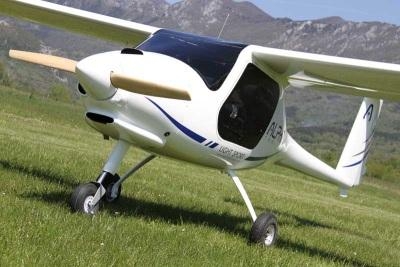
Only weeks after introducing its new four-place Panthera composite hybrid airplane, Pipistrel has taken the wraps off a its brand new Alpha Trainer ... which as the name suggest is designed as a primary training airplane.

On its website, Pipistrel says that the new aircraft is designed for Light Sport Aircraft Flying Schools in markets and countries which have the FAA-LSA (or adaptation of ASTM rules) categories. The Pipistrel ALPHA Trainer is fitted with the Rotax 912 - 80 horsepower engine, the airframe is a composite, two-seat, side by side, high wing. Like all Pipistrel aircraft the ALPHA demonstrates very frugal fuel consumption averaging 3.4gph at cruise and only 2.1 gph in the pattern for such exercises as touch-and-gos.
In a flight test review forwarded to ANN by Pipistrel, the company says the new airplane is based on the NASA awarded Virus SW the Pipistrel ALPHA Trainer shares the same fuselage shape and a very similar wing design to the Virus SW. The wingspan of 34.5 feet is slightly less than a Cessna 172 so hangar space should not be a problem. The Rotax 80 horsepower engine provides more than adequate performance swinging the fixed pitch wooden Pipistrel propeller. The Pipistrel ALPHA Trainer has a very robust undercarriage. While nothing is unbreakable, Pipistrel says this configuration is certainly close and should endure the rigours of flight training over the years.
The basic specifications of the aircraft are:
Empty weight: 615 pounds
Maximum takeoff weight: 1,212 pounds
Payload with full fuel: 507 pounds
Baggage allowance: 55 pounds
Cruising speed: 108 knots
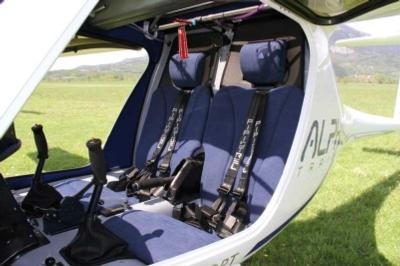
In the flight test review, Pipistrel's Michael Coats writes "The acceleration even on long grass at the Pipistrel airfield is more than sufficient and the aircraft is off in less than 100 metres on an average day, climb rate settles at around 850 feet per minute at maximum takeoff weight. Visibility remains good out the sides but suffers a little bit at the front with the high nose attitude during a steep climb out, the way around this is to slightly lower the nose and climb out at around 80 knots at 700 feet per minute. The aircraft has four positions for flaperons, -5 degrees is used for fast cruise, 0 degrees, +15 and +25 degrees are used during takeoff and landing phases.
"The Pipistrel ALPHA trainer has full length flaperons so there are not separate flaps and ailerons, rather the two are joined together to create less drag and better performance for the aircraft. Passing through 500 feet the flaperons are moved from the takeoff position of +15 degrees, past 0 degrees and down to -5 degrees, the aircraft continues climbing at around 850 feet per minute. It is in this negative flaperon configuration the true performance of the aircraft is shown. Speed increases to around 85 knots and levelling off at the top of climb the aircraft easily achieves the stated 108 knots cruising speed at about 5250 rpm.
"All of the controls are really light and harmonised and take very little effort to fly the aircraft. Aggressive handling can give very sprightly performance but it is important to know that this is not an aerobatic aircraft but a training and pleasure aircraft. Dropping the RPM slightly to around 5100 rpm the cruising speed comes back to around 100 knots; still fast enough for most people but with an improvement in fuel consumption and range. At 4800 rpm we indicate 86 knots and this is a really nice speed to fully evaluate the aircraft's performance and right on VA."
Pipistrel says the airplane is expected to enter the market at about $85,000. The base price includes a radio, GPS, transponder, and ballistic parachute system.



 ANN's Daily Aero-Linx (04.13.24)
 See All