Clark School Makes Four-Second Flight In Human-Powered Helicopter | Aero-News Network
Aero-News Network
RSS icon RSS feed
podcast icon MP3 podcast
Subscribe Aero-News e-mail Newsletter Subscribe

** AIRBORNE 06.18.13 Aero-TV-- CLICK HERE! ** HD iPad-Friendly Version -- AIRBORNE 06.18.13 **

** AIRBORNE 06.14.13 Aero-TV-- CLICK HERE! ** HD iPad-Friendly Version -- AIRBORNE 06.14.13**

** AIRBORNE 04.01.13 SPECIAL EDITION of Aero-TV-- CLICK HERE! ** HD iPad-Friendly Version -- AIRBORNE 04.01.13 SPECIAL EDITION **

Sat, May 14, 2011

Clark School Makes Four-Second Flight In Human-Powered Helicopter

University of Maryland's "Gamera" Claims World Record with Female Pilot Aboard, Confirmation Is Pending

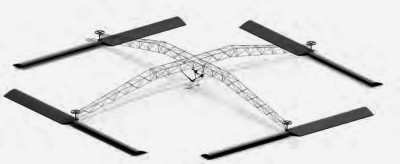
A team of more than 50 students at the University of Maryland's A. James Clark School of Engineering has succeeded in flying their human-powered helicopter, Gamera. At approximately 1730 EDT on Thursday, pilot Judy Wexler, a 24-year-old biology graduate student at UM, pedaled furiously, taking the craft 3-5 inches into the air for about 4 seconds, setting a world record for human-powered helicopter flight with a female pilot.


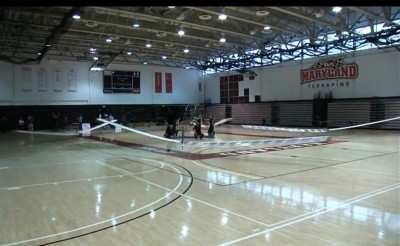
YouTube Frame Capture Of Gamera Flight

Gamera was designed and built by graduate and undergraduate students of the A. James Clark School of Engineering. Kristan Maynard, a judge from the National Aeronautics Association (NAA), announced that the flight looked successful, but the video must be reviewed before they will announce the official results. 


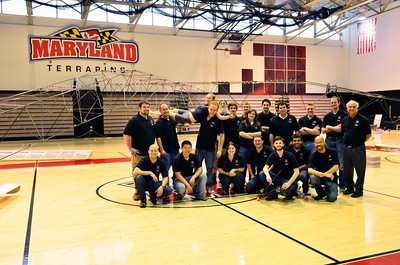
UMD Clark School Team

According to Mr. Maynard, no previous human-powered helicopter flight has been certified. So if the Gamera flight is certified, the vehicle will be the first in history to do so. Even if not certified, the Gamera flight will be the first to be piloted by a woman ... considered a major accomplishment for the Clark School of Engineering and its fantastic faculty, staff and students.

"I am incredibly proud of this amazing feat of engineering and physical prowess, and grateful to faculty mentors Drs. Inderjit Chopra, V.T. Nagaraj, and J. Gordon Leishman. Today’s flight of Gamera is a fitting symbol of our excellence in rotorcraft research and education, and our first step toward winning the Sikorsky Prize."

To claim the Sikorsky Prize, a human-powered rotary-wing aircraft must complete a flight of 60 seconds duration reaching an altitude of 3 meters (9.8 ft) while remaining in a 10 meter (32.8 ft) square.

FMI: www.eng.umd.edu

Advertisement

More News

Aero-TV: Garmin’s GNC-255 –- Back To Basics

Garmin's New Aviation VHF Radios Early this year, a new series of aviation VHF COM and NAV/COM radios, the GTR and GNC series, was announced by Garmin. As the replacement products >[...]

EADS And Siemens Enter Long-Term Research Partnership

Sign MoU With Diamond Aircraft On Electric Propulsion System EADS and Siemens are entering into a long-term research partnership to introduce new electric propulsion systems that c>[...]

ANN's Daily Aero-Term (06.19.13): Ceiling

The heights above the earth's surface of the lowest layer of clouds or obscuring phenomena that is reported as broken, overcast, or obscuration, and not classified as thin or parti>[...]

ANN's Daily Aero-Linx (06.19.13)

The Army Aviation Heritage Foundation The Army Aviation Heritage Foundation (AAHF) is a non-profit public educational foundation dedicated to presenting the Army Aviation story to >[...]

Aero-News: Quote Of The Day (06.19.13)

“The serial electric propulsion allows us to design airplanes with totally different characteristics than today. Vertical take-off and high-speed cruise can be realized in a >[...]

blog comments powered by Disqus


Advertisement

Advertisement

Podcasts

Advertisement

© 2007 - 2013 Web Development & Design by Pauli Systems, LC